Showing posts with label marriage. Show all posts

Thursday, 8 October 2015

The disastrous Willoughby-Littleton marriage

Image result for francis willoughby
Francis Willoughby
Francis Willoughby (1547-96) was the youngest child of Henry Willoughby (d.1549) and Anne Grey (d.1548). Francis' childhood was one of instability and confusion. Francis lost his mother when he was only a year old, and then his father a year later when he was killed during the suppression of Kett's Rebellion. Francis and his two elder siblings, Thomas (1541-59) and Margaret were then placed into the care of their mother Anne's family. Anne's brother was Henry Grey, the father of Jane Grey. Thomas as the heir became the ward of Henry Grey and his wife Frances Brandon, whilst Francis and Margaret were sent to George Medley, Henry Grey's elder half-brother. The attempt to place Jane Grey on the throne of England in 1553 cost Henry Grey his life and many of his relatives were arrested too. George Medley was sent to the Tower of London, and upon his release in May 1554 he could no longer take care of Francis and Margaret. Frances Brandon took the two younger Willoughby children into her care, she sent Francis to school and Margaret became her Lady-in-Waiting. Thomas Willoughby's wardship was bought by William Paget and was married to his daughter Dorothy. In August 1559 Thomas died from exhaustion whilst hunting, and so at the age of thirteen Francis became heir to his father's estates which he came into full possession of in 1564. Due to this change of circumstance Francis' wardship was up for sale and was bought by Sir Francis Knollys in 1560. In 1564 Francis Knollys proposed a marriage between his daughter Elizabeth and his ward Francis. However, Francis refused this match. It was his refusal that indicated to Francis Knollys that he was old enough to be in charge of his own affairs, and soon after his wardship was transferred back to the estate and Francis took possession of his estates.

Image result for elizabeth littleton willoughby
Elizabeth Littleton
In the winter of 1564 Francis Willoughby married Elizabeth Littleton (1546-94), daughter of his Warwickshire neighbour Sir John Littleton, and this marriage would consolidate Francis' connection to the powerful Midlands families. The marriage agreement dated the 20th November stated that Sir John would pay £1500, provide clothes for Elizabeth and residence with six servants at his house in Frankley for the couple for three years, and Francis gave Elizabeth a one third jointure in his estates excluding the coal mines.
Francis and Elizabeth had twelve children but only six survived to adulthood, all of whom were daughters;
+ Frances (1572-1665) m. John Drake m2. Montague Wood
+ Bridget (1566-1629) m. Percival Willoughby
+ Dorothy (1574-1632) m. Henry Hastings
+ Margaret (1570-97) m. Robert Spencer
+ Abigail (1576-1654) m. William Pargiter
+ Winifred (b.1578) m. Edward Willoughby
The couple had a number of sons, however none of them survived childhood; the last died aged six in 1580. Due to his lack of a son and heir, in 1583 Francis had his daughter Bridget married to a cousin named Percival Willoughby, and made him his heir.

Description: Description: Description: C:\Users\Kathy Emerson\Documents\My Web Sites\Kateemersonhistoricals\httpdocs\willoughby,bridget.jpg
Bridget Willoughby
Francis shared a close relationship with his sister Margaret, who married Matthew Arundell (1533-98). Margaret did not approve of Francis' marriage to Elizabeth; her initial reasoning being that her father John Littleton was not trustworthy and Francis could make a better marriage. Margaret's concerns were not unfounded as Sir John failed to provide the dowry for Elizabeth that was agreed upon, which caused huge arguments between Sir John and Francis. Margaret also did not like Elizabeth, writing to her brother in 1564 that she hoped his marriage would not turn out to be a case of 'marry in haste, repent at leisure'. Even once Francis had married Elizabeth, Margaret refused to be in the same place as Elizabeth.

Francis and Elizabeth's marriage was a disastrous one and it appears that both sides were at fault. Arguments turned into abusive behaviour. Francis placed restrictions on his wife; Elizabeth was allowed access only to her rooms and Francis refused to provide for her attendants. She was allowed to only occupy herself with raising her daughters, needlework, reading, playing the virginals, card games and conversing with her attendants. Elizabeth was almost constantly ill and often visited her physician in London and took visits to Buxton, which was an expense that Sir Francis was not happy to maintain. By the 1570's the couple's relationship was crumbling and only worsened throughout that decade. In 1572 Elizabeth only had a handful of women attendants in her household; Elizabeth Mering and Marjory Gardner - two gentlewomen to attend her, two nurses for the children, a fool named Mary and two other women, whereas her husband had around 50 men in attendance. This situation worsened over the decade; eventually Elizabeth found herself under house arrest by her husband; he complained that she led a 'disorderly life', kept company with people he disapproved of and continually reviled him to his face. These reports may not be entirely inaccurate as when Elizabeth was asked by Sir Fulke Greville why she refused to be ruled by her husband she replied that she was 'the Queen's sworn servant and knew not but Sir Francis might command her something against Her Majesty's proceedings'. She was confined to her own rooms, was not allowed to 'discharge or receive any servant' or 'strike or evil entreat any servant' and she was not allowed to see her children who were then in the care of their nurse Joan. Elizabeth had to follow the orders of two household Captains, was banned from the household stores and from buying anything and had 'no authority to command anything in the house except necessary diet for herself'. It didn't help the situation that Margaret was making the couple's arguments public knowledge, and the household servants were also interfering and taking sides.

The couple separated in 1579, and Sir John asked Francis to provide an allowance for Elizabeth to live on. When the couple's only son died in 1580 Elizabeth offered to reconcile with Francis in the hope that they could have another son, but this did not happen. In 1582 Queen Elizabeth ordered Francis to pay his estranged wife £200 per year 'for Elizabeth's separate maintenance'. Elizabeth went to live with her father and had to rely upon him for 'comfort in my griefe, assistance in my troubles and succor in my necessities'. During the years of her separation from her husband, the malicious rumours against Elizabeth eventually convinced even her father of her bad character, and she was required to plead with him to 'take pitie of me as yor naturall childe, have compassion of me as a distressed woman'. Elizabeth became unhappy with this separated state of her marriage and often wrote to Francis asking him to take her back, despite all of their previous marital disharmony. Francis fathered an illegitimate son in 1585. Francis and Elizabeth reconciled in 1588, however Elizabeth's health deteriorated and her behaviour became the same as before. Her visits to Buxton recommenced but seem to have had little effect; Francis writing in April 1589 that 'my wife hath beene longe sicke, and for the recoverie of her health is at Buckstones, wheare havinge receaved noe healpe is growne to suche weakenesse, that nowe beinge desyrous to retorne home is not able to adventure the iorneye eyther on horsebacke or in a coache'*. Elizabeth died on the 4th of June 1594.

In August 1595 Francis married an 'astute widow', Dorothy Colby, daughter and heiress of Thomas Colby. Dorothy was the widow of John Tamworth (1562-94) whom she had married in 1583 and had two daughters, Dorothy and Katherine, with. Dorothy and Francis were married for only fifteen months before Francis' death on the 16th November 1596. There were suspicions that Dorothy had murdered her husband with poison, however she was never formally accused. At the time of his death Dorothy was pregnant. She gave birth to a daughter Frances on the 3rd May 1597, however the child died soon after. Dorothy married her third husband Philip Wharton (1555-1625) within two months of giving birth to Frances. After an unhappy third marriage, Dorothy Wharton died in 1621.

For a more complete view of the family, Francis and Elizabeth's descendant Cassandra, Duchess of Chandos, compiled and published the family papers which give an intimate look at the couple's marriage.

* = Letter from Francis Willoughby to Bess of Hardwick, 26 April 1589

Friday, 11 September 2015

Cavendish-Pierrepont marriage negotiations

Frances Cavendish (1548-1632) married Henry Pierrepont (1546-1615) before 1568 and the couple went on to have six children;
+ Robert Pierrepont (1584-1643) m. Gertrude Talbot
+ Elizabeth Pierrepont (1568-1621) m1. Sir Edward Norreys m2. Sir Thomas Erskine
+ Grace Pierrepont (1575-1650) m. Sir George Manners
+ Frances Pierrepont (1575-1648)
+ Mary Pierrepont (1580-1670) m. Fulk Cartwright
+ William Pierrepont (b.1591)

Bess St Loe, otherwise known as Bess of Hardwick, the mother of Frances, and George Pierrepont, father of Henry, exchanged letters discussing a future marriage between their children. It is perhaps interesting to note that Sir Henry wrote to Frances' mother rather than her step-father William St Loe. This could perhaps indicate that George Pierrepont believed Bess to have more power over the marriage of her daughter than her husband. Perhaps it was the case that Bess was in charge of the marriage of her daughters rather than William St Loe, as she does play a key role in all of her children's marriages. William St Loe was only a step parent to her children and was away from the family home often at the royal court and Bess was comfortably in charge of all domestic matters. George Pierrepont seems to be the one who is pushing the marriage forward, in particular in the second letter here where he is urging that the paperwork be signed as soon as possible. The letters shown here are from 1561 and 1562 respectively.


4 November 1561, Sir George Pierrepont to Bess St Loe

To the right worshipffull and my Singuler goode ladye my ladye Sentloo at London this be delivered.

Right wurshipffull. and my vereye good ladye
after my hertiest maner I comende me to your good ladishepe
even so preye yow I meye be to good Master Sentloo
most hertelye thanckinge yow boothe
for your great paynes taken with me at holme
acceptinge euerye thinge (thoughe it were neuer so rewdlye handlyde) in suche gentill sorte as ye dyde which doithe and will cause me to love yow the better whuell I lyve
yf I were abill to doo yow othere pleassure or service and the rathere because I vnderstand
that your ladishipe hathe not forgotten my sewte to yow at your goinge awaye as speciallye to make Master Sackvile & Master attorneye my ffrendes
in the matter betwene Master whalleye and me wherin he doithe me playne wronge (as I take it in my concyence) onelye to kepe trouble & vnquyett me
But I trust somoche in godes helpe
and partlye by your ladishipes good meanes
and contynewance of your goodnes towardes me
that he shall not ouerthrowe me in my rightiose cause
and touchinge suche cominication. as was betwene vs at holme
yf your ladishipe. & the gentillwoman your doughtour
lyke our boye vppon sight
aswell. as I & my wife lyke the yonge gentillwomman
I will not shrincke one worde. ffrome yat I said or promysed
by the grace of gode who preserve your ladishipe
and my master your husbande longe togethere
in wealthe. healthe and prosperytie. to his pleasure. and your gentill hertes desyer
ffrome my pover house at woodhouse. the iiijth of november .1561.

by the rewde hastie hande. of your goode ladishipes. assuredlye allwaye to comaunde

George. pierponnte. K.


18 May 1562, Sir George Pierrepont to Bess St Loe

To the right worshipfull and my vereye good ladye my Ladye Sentloo at Chattesworthe this be delivered

Right wurshipffull. and my vereye good ladye
after my hertiest comendacions to your good ladishepe remembred even so require yow I meye be to good Master Sentloo. with most entyer thanckes for my wyne yat I haue ben bolde to take of his lyberalytie
most hertelye thanckinge yow ffurthere for your bountiouse goodnes & cost bestowed of henrye my sonne & of those yat were with him at London as also for the good will and ffauour that I perceave ye beare to my said sonne
which I preye gode he maye deserve
and perceaved ffurthere yf ye coulde geat leave ye woulde come to Chattesworthe this whitsontide whethere ye would be glade to haue me & my wiffe to come. lyke as I vnderstand the same. by a lettre receaved this morninge ffrome Master Hardwycke
wherbye I do not onlye perceave ye be come to Chattesworthe but would haue me & my wife to come over to make merrie
but to procede ffurthere to the perffytinge of the wrytinges accordinge to our former comunication 
trulye madame I woulde as gladlie come as ye woulde be to haue me
but I am not abill to goo nor ryde
but to my great payne trouble & shame
and because I woulde ye shoulde not thincke I doo yt to staye of anyethinge
which I am as willinge to haue performed and perfyted as ye arre
after the wrytinges be maed & sealled
yt shull be at your pleasure to cause the same to be drawen in paper accordinglye as I thincke ye haue goode remembrance of tharticles of our agreament
ye recyted them so fformallye a lytill before our partinge
and so send them to me
or else I to geat them done
thoughe learned men be skaunt in the countrye at this presente
and so I to sende them to yow. which ones agreede vppon by vs boothe and our councelles then to ingrose the same readye to seallinge. which for my parte I shall doo. so ffare as I can with my helthe and after to haue the matrymonye so sone accomplyshed. as ye shall seame goode & conveynyent at your pleasure
and forasmoche as I am even nowe & haue bene for this fourtnight or iij. weekes. moche troubled. with payne of my disease I shall require yow to take this rewde wrytinge in good part. yat wrytes with moche payne
vntill I know furthere of your pleasure in the meane season leavinge to trouble yow anye ffurthere. doo beseche allmightie gode to haue yow and Master Sentloo euermore in his kepinge. ffrome holme in hast the xviijth of maij 1562.

in hast & leasureles by your good ladishipes to his lytill powere

George. pierponnte K.

Friday, 4 September 2015

Margaret Wotton and her son Henry Grey

Margaret Wotton (1487-1541) was the mother of Henry Grey (1517-54), the future father of Queen Jane Grey, by her second husband Thomas Grey. After the death of her husband, Margaret and Henry's relationship deteriorated and only worsened over the years. 


Hans Holbein the Younger (after) - Margaret, Marchioness of Dorset (Anglesey Abbey).jpg
Margaret Wotton, early 1530's
Margaret's husband died on the 10th October 1530, and her son Henry succeeded as the Marquis of Dorset. Due to Henry still being a minor, Margaret was granted custody of her late husband's estate until her son reached maturity. This was the first problem created as Margaret was now in charge of providing Henry with an allowance, which had been outlined in her late husband's will. Henry believed this allowance was not sufficient for someone of his position. This control over her son's finances and restrictions upon him shocked her peers as they saw it as a lack of generosity and motherly care. They also said her actions were not appropriate towards a man, like Henry, who was a close kinsman to the king - through the king's mother Elizabeth of York. In 1534 Margaret felt the need to respond to the allegations against her being an 'unnatural mother'. She agreed to increase his allowance and help to strengthen his position 'as my small power is and shall be'.

In late 1530 or early 1531 Henry Grey broke his pre-contract of marriage to Katherine FitzAlan, daughter of the Earl of Arundel. It seems that the couple disliked each other greatly, and that this was the reason for it being called off by Henry. For this breach of contract, a fine of 4000 marks was to be paid to the Earl of Arundel by Henry, or rather by Margaret, in yearly installments of 300 marks - which would take around 13 years to pay off in its entirety. 
This huge, and unexpected, debt left Margaret worried that she may "not set forth my daughters in marriage" - of which she had four - "neither continue in the keeping of my poor house". She argued that her husband's estate was "right small" in comparison to the debts her husband left as well as the everyday expenses of her children and household. 
On 19th November 1531 Margaret wrote to Thomas Cromwell asking him to negotiate with the Earl of Arundel on her behalf, so that he would reduce the debt she owed him by 1000 marks. She felt this was justified as the marriage contract between her daughter Katherine Grey and the Earl of Arundel's son and heir Henry had only cost 3000 marks and therefore why should the marriage of his daughter cost more. 
In 1537 Katherine FitzAlan was exchanging letters with Thomas Cromwell which stated that he supported her in her dispute with Margaret Wotton in relation to the debt she owed; it is possible that Margaret was behind on payments or was refusing to pay them.

For the marriage between Henry and Frances Brandon to go ahead in 1533, Margaret agreed to it solely upon the condition that Frances' father Charles Brandon, Duke of Suffolk, supported the couple financially for the duration of Henry's minority.

In 1538 Henry Grey reached his age of majority and therefore came into possession of his inheritance from his father. Soon after, Henry took his financial problems with his mother to the King's Council, where she did admit that Henry's allowance was not 'meet or sufficient to maintain his estate' and she offered to increase the amount he was receiving. However, this did nothing to ease the tension between the two and as a result Margaret moved out of the family home of Bradgate House. Henry would not allow his mother's servants to retrieve her personal possessions so she could take them with her. Margaret wrote to Thomas Cromwell asking for his help with her son and that he could persuade Henry to give her her possessions as she was a 'poor widow...unkindly and extremely...handled by my son marquis'.

Friday, 21 August 2015

The search for Henry VIII's sixth wife

Image result for henry viii 1542
King Henry VIII, 1542

In February 1542, even before the death of Queen Katherine Howard on the 13th of that month, it appears that King Henry VIII was already looking for a sixth wife, and the rest of the court were also speculating who the lucky lady would be. The ambassador to the Holy Roman Emperor Charles V, Eustace Chapuys, was among those trying to guess where the king's eyes would rest next. 


The lady for whom he showed the greatest regard was the sister of lord Cobham, whom Wyatt sometime ago repudiated for adultery. She is a pretty young creature, with wit enough to do as badly as the others if she were to try. The King is also said to have a fancy for the daughter of Madame Albart, niece, of the Grand Esquire, Master Anthony Brown, and also for a daughter (by her first marriage) of the wife of Mons. Lyt, late deputy of Calais—a surmise which rests partly on the fact that after nearly two years' close confinement in the Tower, her father has been liberated, and the King has ordered his arms, which had been removed from their place in the chapel of the Order, to be replaced. - Chapuys to Charles V, 9th February 1542

'Madame Albart' = Lucy Somerset, Lady Herbert (1524-83). Lucy was the daughter of Henry Somerset and Elizabeth Browne, and came to court to serve as Maid of Honour to Queen Katherine Howard. In 1545 she married John Neville (1520-77) who was a stepson of Queen Katheryn Parr, whom she then served as Maid of Honour. Lucy and John Neville had four daughters.


'Sister of Lord Cobham' = Elizabeth Brooke (1503-60). She was married to Thomas Wyatt (d. 11 October 1542) in 1520 but they had long been separated. They separated in 1526 and he supported her financially until 1537. At which time she then moved in with her brother. They separated due to adultery, which Wyatt said was on Elizabeth's side. She remarried after her husband's death to Edward Warner (1511-65). Elizabeth had a son, Thomas (1521-54), with her first husband. and then had three more children with her second husband; Edward, Thomas and Henry. At the time the letter was written, Elizabeth was still legally married to Thomas. It has been suggested that the Elizabeth Brooke that Chapuys refers to in the letter is in fact this Elizabeth's niece of the same name born in 1526 - putting her in the same age range as the other two women mentioned. However, as Chapuys knew her marital history and therefore this younger Elizabeth would seem too young at only sixteen to have been married to Wyatt and separated for a long period of time, it seems unlikely that he would make that mistake. 


'Daughter of the wife of Lord Lisle' = Anne Bassett (1521-58). Anne had been in royal service since 1533, as part of Queen Anne Boleyn's household. She did not marry until 1554 to Walter Hungerford. She was rumoured to be Henry's mistress in 1538-9, despite being related to the king by marriage as her stepfather was King Henry's uncle. Anne had also been considered a possible wife by many to become the king's fourth wife in 1540.


The day after the execution of Katherine Howard, the king held a banquet for many men and women and he was said to favour Elizabeth Brooke and Anne Bassett the most.

However, as we know King Henry did not marry any of these three women. On the 12th July 1543 he married Katherine Parr. Katherine had joined Princess Mary's household by the 16th of February that year, her second husband having recently died. 

Friday, 19 June 2015

Jilting Bernard Ezi

Princess Isabella (b.1332) was the eldest daughter of King Edward III of England and his wife Philippa. Isabella was spoiled and over-indulged by her father, who allowed and forgave her anything.
In 1351, when Isabella was 19 years old it was announced that she was to marry Bernard, second son of Bernard Ezi Lord d'Albret (1295-1358) and Mathe D'Armagnac (1300-48). Lord d'Albret was a Gascon lord and King Edward's chief lieutenant in the region.

Image result for edward iii 1350
King Edward III
Due to Isabella's willful nature, she must have at the very least agreed to the match, rather than her father arranging it. There was very little to be gained by King Edward by marrying Isabella into the Ezi family as they were not politically prominent. It is possible that it was a love match, and that Isabella had met the diplomat's son and fallen in love with him, and told her father that she wished to marry the young Frenchman. In early May the king wrote to Lord d'Albret agreeing to the betrothal "with mutually glad hearts", again showing that this match was not initiated by the king, and it is doubtful that Lord d'Albret would suggest such a marriage.

The wedding was to take place in Gascony, where the Ezi family were seated, at the request of Lord d'Albret. King Edward settled a marriage portion on Isabella of 4000 marks as well as £1000 per year, along with the condition that if for any reason the marriage does not go ahead, Isabella was to keep the money. Isabella's impressive wedding trousseau was an array of expensive materials and jewels, including; cloth of gold, Tripoli silk, Indian silk lined with ermine, all embroidered in silver and gold - using seven ounces of gold thread.

Isabella was to sail to Gascony immediately after Christmas, and on the 15th November five ships were placed west of the mouth of the Thames River ready for her journey. As well as this, all ships bound for Gascony were told to dock at Plymouth so that they could accompany the Princess' fleet on their journey. However, a week before she was set to sail Isabella suddenly changed her mind and called off the wedding. King Edward showed no signs of being angry with his daughter, and in fact seemed delighted with her decision. He rewarded her with money, estates and honours over the next few years.

Bernard Ezi was devastated by Isabella's actions. He signed all of his rights and possessions over to his younger brother, and then entered a Franciscan monastery where he died later that month.

It is possible that Isabella's actions were related to her own experience when she herself was jilted by Louis de Male, Count of Flanders in 1347. After nine years of refusing, Louis finally agreed to the marriage, however as soon as the engagement was formalised in Flanders the whole court absconded. Isabella was quite literally left at the altar by her fiance. Isabella had to make the return journey to England and returned humiliated. For a spoiled child who was accustomed to having her own way, this may have been a slight she could not forget. Or perhaps, she remembered how only three years earlier, her sister Joan had sailed to France on the way to her wedding and how she had died of the plague during the journey through France. A third, more selfish, reason is possible; Isabella saw herself gaining nothing by marrying. She had money and was the most important woman at the royal court after her mother the queen. Whatever the reason, Isabella had made her decision and there was no changing her mind. 

Image result for isabella de coucy 1332
Marriage of Isabella and Enguerrand, 1365
Isabella did finally marry on the 27th July 1365 at the age of 33. Having the eldest daughter of a king marry so late in life would have been highly unusual, especially as by the end of 1561 Isabella was their only surviving daughter. Enguerrand, Lord of Coucy, was brought to England in 1360 as a hostage to be exchanged for an English prisoner, King John II of France. Enguerrand was seven years younger than Isabella, and the son and heir of a wealthy French lord. It seems that while he was in England, Isabella fell in love with him; again she was allowed to choose her husband rather than have an arranged marriage. Isabella and Enguerrand had two daughters; Marie (1366-1404) and Philippa (1367-1411). King Edward did not stop indulging his daughter; he released Enguerrand from being his prisoner without demanding a ransom, and he later made him Earl of Bedford and Count of Soissons.

Isabella was with her father when he died on the 21st June 1377. She spent most of her time at the English royal court, as her husband returned to France only a few years into the marriage, so Isabella and her daughters lived at her father's court. After the accession of her nephew King Richard II, Enguerrand cut all ties with England. Isabella died suddenly in England in 1379.

Friday, 10 April 2015

Samuel Pepys and his sister Paulina

Paulina 'Pall' Pepys (1640-89) was the only surviving sister of Samuel Pepys out of the five daughters born to their parents John Pepys and Margaret Kite.
In February 1668 Paulina married John Jackson (1640-80) and had two sons; Samuel (b.1669) and John (1673-1723).

Samuel Pepys
At the time when Samuel Pepys begins his famous diary, his relationship with his sister is not a good one and she seems to already have had a reputation for misbehaving and causing trouble. Throughout his diary, Samuel mentions the sums of money he gives to his sister for her personal use.
The second mention of his sister Paulina in the diary, on the 24th January 1660, contains a complaint about her behaviour. Paulina had been stealing items, including scissors from Samuel's wife and a book from his maid.
In the November of 1660 it was agreed that Paulina would go and live with Samuel and his wife, however she would not be a guest, instead she would work for the couple as a servant. Paulina moved in on the 2nd January 1661, and even on that first evening Samuel would not permit her to dine with them, as he feared she would expect to every evening. Paulina spent most of her time at the Pepys house with Samuel's wife Lizzie as her maid.

Image result for samuel pepys wife
Lizzie Pepys
The arrangement seems to have only lasted for a few months as by July 1661 Samuel was already determined to be rid of her. On the 25th August, Samuel convinced his father to allow Paulina to move back to their parents house in the country. She did not leave however until the 5th September as the Pepys' other maid had quit and Paulina was doing all of the household work.
Throughout 1662 Samuel continues to make complaints about Paulina's behaviour. On the 11th June, Samuel complains that Paulina writes to their father unnecessarily about how ill their mother is, forcing him to leave London early. On the 14th October, Samuel says of his sister that he finds her 'so very ill-natured that I cannot love her, and she so cruel a hypocrite that she can cry when she pleases'.
In January 1663, Paulina returned to living with the Pepys', as they needed a maid and to use Paulina would 'save money flung away upon a stranger', despite the fact that neither Samuel or Elizabeth were particularly interested in having Paulina in their house again. In July 1663 Paulina was causing trouble in the Pepys household as she was causing difficulties between Lizzie Pepys and her companion Mary Ashwell, who had joined the Pepys household in March of that year.

In December 1663 Samuel comes to the conclusion that his sister 'grows now old, and must be disposed of one way or another'. In short, he decided it was time to find her a husband to get her out of his way. Samuel Pepys was responsible for providing the monetary dowry for his sister; the amount of which heavily affected the choice of husband. The first mention of the dowry states that Samuel is willing to give his sister 400l (5th October 1665). On the 14th January 1666, this is increased to 450l, in addition to 50l that she receives from her uncle; providing her with 500l in total.

On the 9th of February 1664 the first proposed husband mentioned in the diary is a Captain Grove. It appears that this match did not last long however, and in May it was decided that Paulina would move back to London to live with Samuel in the hope of finding her a husband.
The Pepys house in Brampton
The next potential husband mentioned is Philip Harman on the 21st July 1665. Philip Harman (1637-97) was an upholsterer in Cornhill and was distantly related to the Pepys' by marriage, Samuel described him as 'a most good-natured, and discreet man, and...very cunning'. He had only recently lost his wife at the time of his mention in the diary. When the topic of Paulina's dowry was discussed between Philip and Samuel, Samuel offered a dowry of 500l. However, Philip stated that he didn't need the money and that the money should be given to Paulina for her own personal use, perhaps to the amount of 200 or 300l. The match with Paulina was not successful, despite it continuing until March of 1666, and he was still unmarried in 1668.

On the 16th of February 1666, Samuel has the idea of a man named Benjamin Gauden as a match for his sister. He is a connection of Samuel's through the Navy as Benjamin was the son of the Navy victualler, Dennis Gauden. Initially Benjamin had expected a dowry of 1000l, however he and Samuel came to an agreement by which Samuel would give only half of that and the remainder would be taken yearly out of the amount he usually pays to Samuel. Therefore on the 2nd April 1666, it seemed set that Benjamin would marry Paulina. However after his meeting with Benjamin, Samuel then went to the London Exchange and was advised by a Mr Warren that such a marriage would not be acceptable and would cause only harm for both Samuel's and Benjamin's businesses. Samuel then saw fit to cancel the arrangement with Benjamin Gauden.

The next suitor for Paulina was proposed by Samuel and Paulina's father in March 1666. The gentleman in question is from Brampton - the Pepys' home in the country - rather that one of Samuel's connections from the city. The man was called Robert Ensum, who had 'seven score and odd pounds land per annum in possession, and expects 1000l in money by the death of an old aunt'. Samuel notes that Ensum has no close family, with both his parents being deceased and being an only child. Ensum asked for a dowry of 600l from Samuel for Paulina, as well as 100l upon the birth of Paulina and Ensum's first child. Despite the high cost of the dowry, Samuel seems to be set upon this match for his sister until Lizzie tells him her opinion of Ensum; that he is a 'drunken, ill-favoured, ill-bred country fellow', which makes Samuel decide to continue the match with Harman instead. It appears that Lizzie's opinion of Ensum was either ignored or untrue as in June 1666, Samuel's father gave his approval to the match with Ensum. Samuel would then give Ensum 500l and 100l upon the birth of the first child born to the couple. This match came to an abrupt end however, when on the 12th of December 1666 Robert Ensum died.

By 1667 it seems that Samuel was getting tired of his sister and was desperate to have her married; Samuel and his father searched for 'a husband for my sister, whereof there is at present no appearance; but we must endeavour to find her one now, for she grows old and ugly' (10 October 1667).

Just a month after this raw desperation, the man who would go on to marry Paulina was found in November. Samuel's father wrote to him to suggest a grazier named John Jackson, who was the executor of the estate of his cousin Robert Ensum - Paulina's former fiance. Samuel intended to give 500l as a dowry if Jackson was interested in the match. Jackson was set to inherit the estate of his uncle Luke Phillips, a lawyer who often acted for Samuel Pepys.

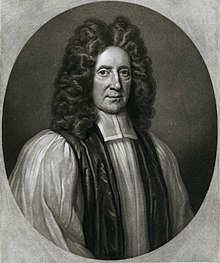
Richard Cumberland
In January 1668 Samuel writes that he would prefer his sister to marry Richard Cumberland (1631-1718). Cumberland was a Bishop and a philosopher who went to school with Samuel, who had 'a mighty mind to have a relation so able a man, and honest, and so old an acquaintance as Mr Cumberland'. However, as Mr Cumberland is not mentioned again, this idea may have stemmed only from Samuel's admiration of the man and not the practicality of finding his sister a husband.

It seems that Samuel asked his cousin Roger Pepys to review the estate of John Jackson in January 1668, which satisfied Samuel enough to allow him to approve of him as a husband for Paulina. In February, Paulina was given her portion of 600l, as well as to be given 60l annually.

On the 2nd March 1668, Samuel received the news that Paulina was married to John Jackson the previous Thursday. The couple went to live in Ellington, close to the Pepys home in Brampton.

It seems that after her marriage, the relationship between Samuel and Paulina slowly improves; in May 1668 Samuel notes that she 'growing fat, and, since being married, I think looks comelier than before: but a mighty pert woman she is, and I think proud, he keeping her mighty handsome, and they say mighty fond'. Which, although is not entirely complimentary, it is an improvement on the things he had previously said about his sister. The final mention of Paulina in the diary is that she is pregnant in May 1669, with her eldest son whom she will go on to name Samuel.
The relationship between Samuel and Paulina did improve as they got older, and Paulina's second son John became Samuel's protege and heir and was present at his uncle's death in 1703.